
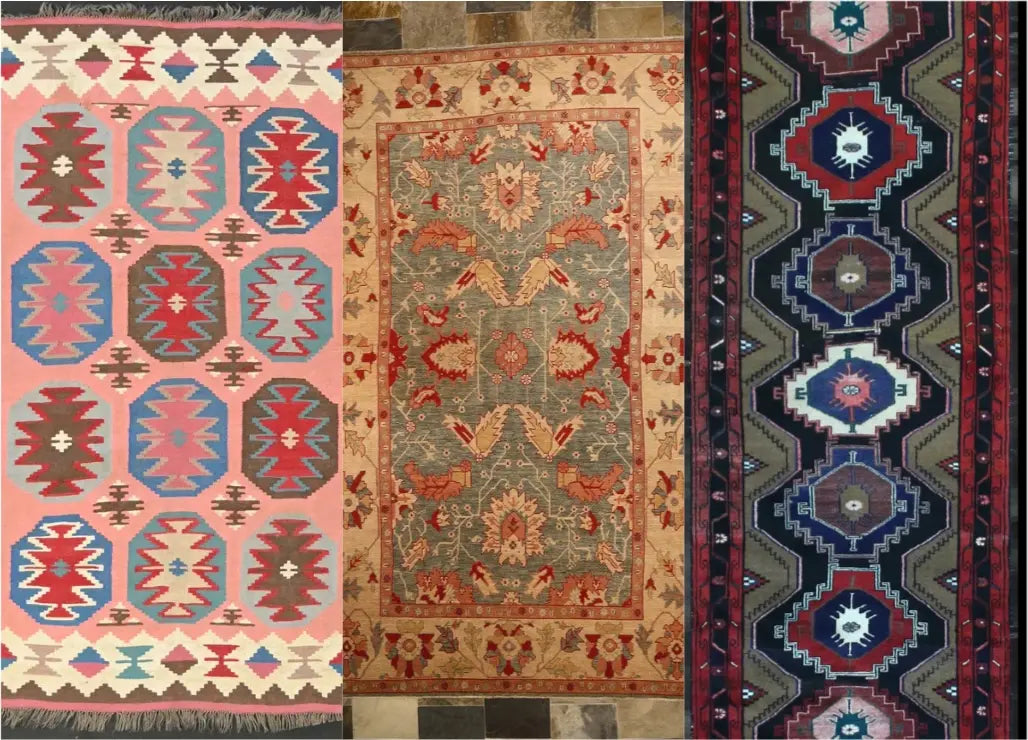
Persian, Turkish, and Afghan rugs are often grouped under the broad label of Oriental rugs, but they come from different weaving traditions. Each one has its own design language, knotting methods, color habits, materials, and cultural history.
That difference matters when you are buying a rug, identifying one you already own, or deciding how to care for it. In this article, we’ll compare Persian vs Turkish vs Afghan rugs so you can understand what sets each style apart and what to look for before making a decision.
Key Takeaways
- Persian, Turkish, and Afghan rugs are all part of rich weaving traditions, but they differ in origin, design style, knot structure, colors, and common materials.
- Persian rugs are often known for detailed patterns, floral motifs, medallions, fine craftsmanship, and strong collector appeal.
- Turkish rugs often feature geometric patterns, symbolic motifs, strong construction, and the symmetrical Turkish double knot.
- Afghan rugs are often recognized for deep colors, durable wool, tribal patterns, and bold repeating motifs.
- No rug is automatically better because of its origin. Quality depends on the individual rug’s condition, materials, age, craftsmanship, and design.
- Persian rugs often carry strong market recognition, but a well-made Turkish or Afghan rug can be more valuable than a damaged or lower-quality Persian rug.
- The best rug for your home depends on the room, foot traffic, furniture, color palette, and the level of craftsmanship you want.
- If you are unsure whether a rug is Persian, Turkish, or Afghan, Isberian Rugs can help identify its origin, condition, value, and proper care needs.
What Do Persian, Turkish, and Afghan Rugs Have in Common?
Persian, Turkish, and Afghan rugs can all be hand-knotted, made with natural fibers, and valued for their craftsmanship. Many are woven from wool, cotton, silk, or a blend of these materials. Some also use natural dyes, especially in older or more traditional pieces.
They are also shaped by regional design traditions. A rug’s pattern, border, colors, and motifs often reflect the place, tribe, workshop, or city where it was made.
Still, origin alone does not determine quality. A Persian rug is not automatically better than a Turkish or Afghan rug. A well-made Afghan rug can outlast a poorly made Persian rug. A finely woven Turkish rug can be more valuable than a damaged rug from a more famous region.
Persian Rugs: Refined Detail and Historic Design Traditions
Persian rugs come from Iran, formerly known as Persia. They are among the most recognized rugs in the world because of their long history, detailed designs, and strong collector appeal.
Many Persian rugs are known for refined patterns. You may see floral motifs, central medallions, vines, garden layouts, animal figures, and intricate borders. Some designs feel formal and elegant. Others are more rustic, geometric, or tribal, depending on where the rug was woven.
Persian rugs are often grouped by region or weaving center. Common examples include:
- Tabriz
- Isfahan
- Kashan
- Heriz
- Qom
- Shiraz
- Kerman
- Nain
City rugs, such as Isfahan, Tabriz, or Qom, are often finer and more detailed. Village and tribal rugs, like Heriz or Shiraz, may have bolder patterns, stronger geometry, and a more relaxed handmade character.
Turkish Rugs: Geometric Patterns and Strong Knot Structure
Turkish rugs come from Turkey, especially the Anatolian weaving tradition. They are known for bold design, symbolic motifs, and strong construction.
Add product slider CTA here: https://isberianrugs.com/search?q=turkish
One major feature of many Turkish rugs is the Turkish double knot, also called the Ghiordes knot. This symmetrical knot wraps around two warp threads, creating a firm and durable structure. Not every buyer needs to identify knots by name, but knot style is one reason Turkish rugs have a reputation for strength.
Common Turkish rug types include:
- Oushak rugs
- Hereke rugs
- Anatolian village rugs
- Turkish prayer rugs
- Kilims
Oushak rugs are especially popular in interiors because of their softer palettes, larger-scale patterns, and relaxed elegance. Hereke rugs are often finer and more formal. Kilims are flat-woven rugs, not pile rugs, but they are still an important part of Turkish textile traditions.
Traditional Turkish rugs often use wool, and many older pieces have wool-on-wool construction. This can make them feel warm, sturdy, and grounded.
Afghan Rugs: Rich Colors, Tribal Character, and Durable Wool
Afghan rugs come from Afghanistan and are known for rich color, strong wool, and bold tribal character. Many have deep red, burgundy, navy, brown, black, ivory, and earth-toned palettes.
Add product slider CTA https://isberianrugs.com/search?q=afghan
Afghan rugs often feature geometric layouts, repeating motifs, and tribal designs. One of the most recognizable patterns is the gul motif, sometimes called the elephant-foot design. You may also see diamond shapes, octagons, borders with repeated symbols, and strong central fields.
Common Afghan rug styles include:
- Khal Mohammadi rugs
- Baluch rugs
- Turkmen-style rugs
- Afghan Chobi rugs
- Ziegler-inspired Afghan rugs
Khal Mohammadi rugs are often known for deep red tones and dense wool. Baluch rugs tend to be darker, tribal, and more compact in scale. Afghan Chobi rugs often use softer colors and patterns inspired by older Ziegler designs, making them popular for homes that need something lighter or more neutral.
One of the strongest qualities of many Afghan rugs is durability. They are often woven with sturdy wool and practical designs that hold up well in active living spaces.
Persian vs Turkish vs Afghan Rugs: Main Differences at a Glance
The differences between Persian, Turkish, and Afghan rugs are not always rigid, but there are common patterns buyers can look for:
| Feature | Persian rugs | Turkish rugs | Afghan rugs |
| Origin | Iran | Turkey | Afghanistan |
| Common design style | Detailed, floral, medallion | Geometric, symbolic, prayer, medallion, or large-scale patterns | Tribal, bold, geometric, repeating motifs |
| Color palette | Wide range, from jewel tones to soft neutrals | Earth tones, soft palettes, warm colors, or bold village colors | Deep reds, burgundy, navy, brown, black, ivory, and warm neutrals |
| Knot styles | Often asymmetrical Persian knot, though some use symmetrical knots | Often symmetrical Turkish double knot | Varies by region, tribe, and weaving tradition |
| Materials | Wool, cotton, silk, wool-silk blends | Wool, cotton, sometimes silk | Wool, cotton, sometimes natural dyes |
| General feel | Refined, historic, collectible | Strong, graphic, decorative | Durable, warm, tribal, character-rich |
| Value factors | Age, region, material, knot count, condition, rarity | Knot quality, age, origin, materials, condition | Wool quality, age, design, condition, craftsmanship |
These are general tendencies, not fixed rules. A Persian Heriz rug can look bold and geometric. A Turkish Hereke rug can look fine and intricate. An Afghan Chobi rug can look soft and decorative rather than dark and tribal.
Which Rug Style Is Best for Your Home?
The best rug depends on the room, your furniture, your color palette, and how much traffic the space gets.
A Persian rug may be a strong choice if you want something formal, detailed, classic, or heirloom-worthy. Persian rugs often work well in dining rooms, living rooms, libraries, bedrooms, and spaces where a detailed pattern can anchor the design.
A Turkish rug may suit you if you like warmth, geometry, symbolism, or a rug that can bridge traditional and modern design. Oushak rugs, for example, can soften a room without overwhelming it. Anatolian rugs can add character and structure.
An Afghan rug may be best if you want rich color, durability, and a grounded, handmade feel. Many Afghan rugs work well in family rooms, studies, bedrooms, entry areas, and spaces that need warmth and strength.
Which Rug Is More Valuable?
Persian rugs often have the strongest collector recognition, especially pieces from well-known weaving centers. Fine Persian rugs from regions such as Isfahan, Tabriz, Kashan, Qom, and Nain can carry significant value when the materials, condition, and workmanship are strong.
Add product slider CTA here: https://isberianrugs.com/search?q=persia
But that does not mean every Persian rug is more valuable than every Turkish or Afghan rug.
Rug value depends on several factors:
- Age
- Condition
- Size
- Origin
- Materials
- Knot density
- Dye quality
- Design quality
- Rarity
- Repair history
- Market demand
The safest answer is this: the more valuable the rug, the better the rug, not simply the rug from the more famous country.
How to Identify the Type of Rug You Have
Start with the pattern. Persian rugs often have floral details, central medallions, garden designs, or intricate borders. Turkish rugs often lean toward geometric shapes, symbolic motifs, prayer designs, or large-scale decorative patterns. Afghan rugs often feature repeating tribal motifs, deep colors, and bold geometry.
Next, look at the colors. Persian rugs can vary widely, from deep jewel tones to soft ivory and blue palettes. Turkish rugs may include earth tones, faded vegetable-dye colors, or soft decorative palettes. Afghan rugs often use deep reds, burgundy, navy, brown, and black.
Then check the back of the rug. The back can show knot structure, weave density, and whether the rug is handmade. It can also help a rug expert identify construction habits linked to certain regions.
Look at the fringe and edges too. Finishing details can reveal how the rug was made and whether it has been repaired.
If you are not sure, do not guess based on design alone. Many rugs borrow patterns from other traditions. Some Afghan rugs are inspired by Persian or Ziegler designs. Some Turkish rugs can feel floral and refined. Some Persian tribal rugs can look very geometric.
A rug specialist can inspect the full construction and give you a more reliable answer.
Caring for Persian, Turkish, and Afghan Rugs
Persian, Turkish, and Afghan rugs should be cared for based on their fibers, dyes, age, and construction. Origin is useful, but it should not be the only guide.
For everyday care, vacuum gently and avoid aggressive beater bars on delicate or antique rugs. Rotate the rug occasionally so foot traffic and sunlight do not hit the same areas all year. Use a proper rug pad to reduce wear and keep the rug stable.
Avoid harsh cleaners, bleach, and over-wetting. Natural fibers and dyes can react badly to the wrong products. Older rugs may also have weakened foundation threads, worn fringe, or previous repairs that need careful handling.
Spills should be blotted, not scrubbed. Scrubbing can push the spill deeper into the fibers and distort the pile.
Professional rug cleaning is especially important for handmade, antique, silk, wool, or high-value rugs. A trained rug cleaner can test dyes, inspect the foundation, and choose a cleaning method that fits the rug.
When Should You Ask a Rug Specialist?
A rug specialist can help when the rug’s origin, value, or construction is unclear. This matters most before cleaning, repairing, buying, selling, or insuring a rug.
You should ask for expert guidance if:
- The rug is antique or inherited
- The rug may be Persian, Turkish, or Afghan, but you are not sure
- The rug has stains, odor, fringe damage, or worn edges
- The rug may have silk or unstable dyes
- You are considering a major purchase
- You need an appraisal or insurance documentation
- You want to know whether repairs are worth doing
A specialist can identify details that are easy to miss, including knot type, dye quality, repair history, fiber content, and regional construction clues.
Choose the Rug That Fits the Room and the Craftsmanship You Value
Persian, Turkish, and Afghan rugs each bring something different to a home. Persian rugs are often admired for refinement and historic design. Turkish rugs are known for strong structure, geometry, and symbolic patterns. Afghan rugs offer rich color, durable wool, and tribal character.
The best choice is not always the most famous name. It is the rug with the right construction, condition, materials, size, and style for your space.
If you need help identifying, cleaning, repairing, or caring for a Persian, Turkish, or Afghan rug, Isberian Rugs can inspect the piece and guide you on the right next step. A careful evaluation helps protect the rug’s beauty, value, and lifespan.
FAQs
Are Persian rugs better than Turkish or Afghan rugs?
Persian rugs are highly respected, but they are not automatically better than Turkish or Afghan rugs. Quality depends on the individual rug’s materials, condition, age, craftsmanship, and design. A well-made Turkish or Afghan rug can be more durable or valuable than a lower-quality Persian rug.
What is the main difference between Persian and Turkish rugs?
Persian rugs come from Iran and are often known for detailed floral patterns, medallions, and fine weaving. Turkish rugs come from Turkey and often feature geometric patterns, symbolic motifs, and the symmetrical Turkish double knot. These are common differences, but each category includes many regional styles.
Are Afghan rugs of good quality?
Many Afghan rugs are good quality, especially hand-knotted pieces made with strong wool and traditional designs. They are often valued for durability, rich colors, and bold tribal character. As with any rug, quality depends on the materials, weave, condition, and workmanship.
Which rugs are the most valuable?
The most valuable rugs are usually those with strong craftsmanship, quality materials, good condition, age, rarity, and desirable origin. Persian rugs often have strong collector recognition, but fine Turkish and Afghan rugs can also hold significant value.


