
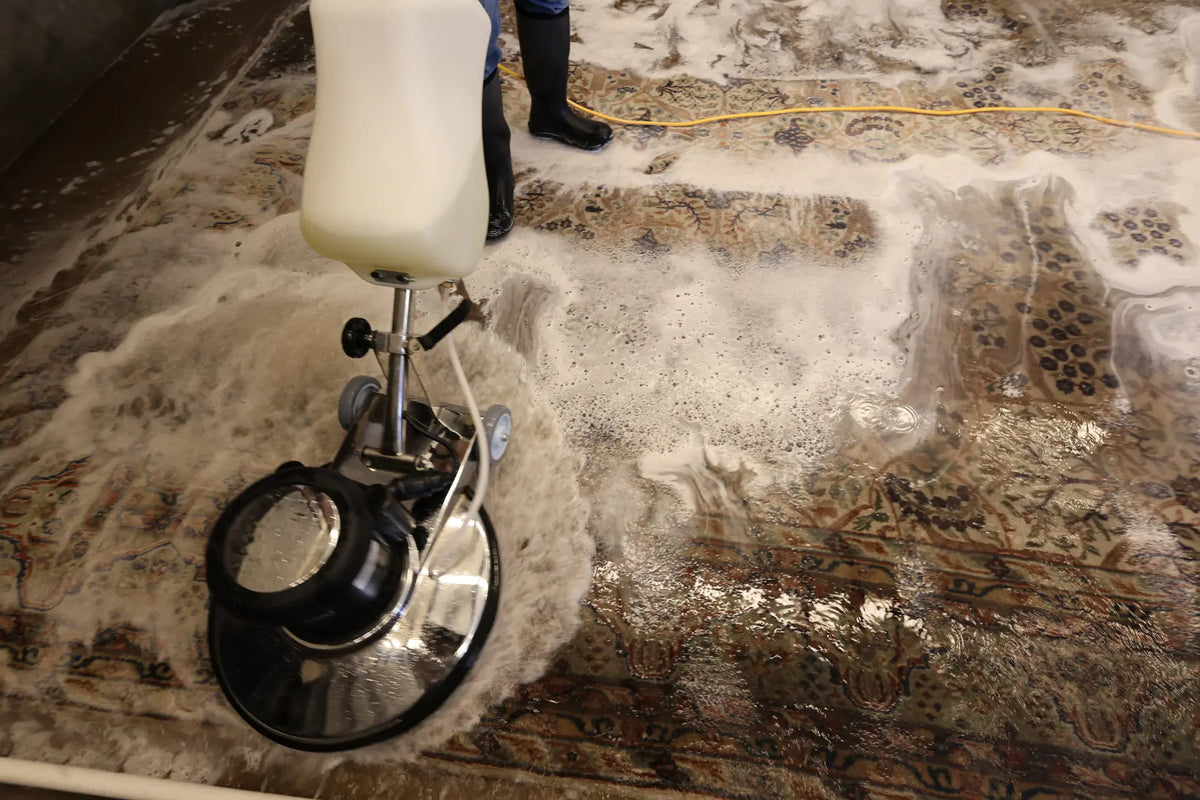
Oriental rugs are built to last, but they do not stay clean on their own. Dust, grit, and everyday use settle deep into the fibers long before the surface shows any signs. Many rug owners wait until a rug looks dirty, but by then, wear has already started to affect its texture and color.
In this article, we will look at how often you should have an oriental rug professionally cleaned, what factors affect that timing, and how to maintain your rug without putting it at risk.
Key Takeaways
- Most oriental rugs should be professionally cleaned every 6 to 18 months, depending on use
- Cleaning frequency depends on traffic, pets, spills, and indoor conditions
- Rugs can hold deep dirt even when they look clean on the surface
- Waiting too long leads to fiber wear, dull color, and persistent odors
- Over-cleaning is only a risk when improper methods are used
- Professional cleaning removes embedded debris while protecting fibers and dyes
- A consistent cleaning schedule helps preserve the rug’s lifespan and value
- Isberian Rugs offers experienced, fiber-specific care for fine oriental rugs
The Short Answer Most Rug Owners Are Looking For
There is no single timeline that works for every home, but most oriental rugs follow a clear range based on use.
- Light use areas → every 12 to 18 months
- Moderate use → every 9 to 12 months
- High traffic areas → every 6 to 9 months
- Homes with pets or frequent spills → may need more frequent cleaning
These are general guidelines. The right schedule depends on how your rug is used day to day, not just how it looks on the surface.
Cleaning Frequency Matters More Than Appearance
An oriental rug can look clean and still hold a large amount of dirt beneath the surface. Dust, sand, and small particles settle deep into the foundation where regular vacuuming cannot reach.
Over time, this buildup starts to affect the rug in ways that are not immediately visible:
- Fine debris cuts into fibers with every step
- Natural oils and moisture attract more dirt
- Colors begin to lose their depth and clarity
Waiting until a rug looks dirty often means the damage has already started. A consistent cleaning schedule helps remove this buildup early and protects the rug’s structure over time.
What Actually Determines How Often Your Rug Should Be Cleaned
Cleaning frequency depends on how your rug is used and what it is exposed to every day:
Foot Traffic and Daily Use
Rugs in busy areas collect more dirt and wear down faster. Hallways, living rooms, and entryways need more frequent cleaning than low-use spaces.
Pets, Spills, and Accidents
Pets introduce hair, oils, and odors. Spills add moisture, which can settle deep into the rug and become harder to remove over time.
Rug Location
A rug placed near an entrance picks up dirt from outside. Rugs in bedrooms or formal spaces stay cleaner for longer.
Indoor Environment
Homes with higher dust levels or poor air circulation tend to see faster buildup within rug fibers.
Fiber Type and Construction
Hand-knotted rugs, especially wool and silk, hold onto dirt differently and require more careful maintenance to stay in good condition.
A Simple Cleaning Schedule Based on Real Use
A clear schedule makes it easier to care for your rug without overthinking it. Start with how the space is used, then adjust as needed.
For low-traffic areas like bedrooms and formal spaces that see minimal daily use, clean every 18 to 24 months.
Moderate use areas like living rooms and dining spaces with regular activity should be cleaned every 12 to 18 months.
For high-traffic areas like hallways, entryways, and busy family spaces, clean every 6 to 12 months.
How Different Oriental Rugs Affect Cleaning Frequency
Not all oriental rugs respond to use in the same way. The material and construction can change how often cleaning is needed.
Wool Oriental Rugs
Wool is durable and holds its shape well, but it traps dust deep within the fibers. Regular professional cleaning helps remove this buildup before it starts to wear the rug down.
Silk and Fine Rugs
Silk rugs are more delicate and show wear faster. They may not need frequent cleaning, but when they do, the process must be controlled and precise.
Older and Antique Rugs
Older rugs often have weaker fibers and sensitive dyes. They require careful handling and a cleaning schedule that protects their condition rather than stressing the material.
Hand-Dyed Rugs
Rugs with natural or hand-dyed colors can react to moisture and cleaning agents. Proper timing and professional care help prevent color bleeding and fading.
Signs Your Oriental Rug Needs Cleaning Sooner
A set schedule helps, but your rug will often show early signs that it needs attention. Paying attention to these changes can prevent long-term damage.
- Colors start to look dull or muted
- The surface feels dry, stiff, or less soft
- Odors remain even after airing out the room
- Dust lifts when the rug is moved or walked on
- Stains begin to set into the fibers
- Allergy symptoms increase indoors
If you notice any of these, it is a sign that dirt and debris have built up beyond what regular maintenance can handle.
What Happens If You Wait Too Long
Delaying professional cleaning does more than affect how a rug looks. Over time, dirt and debris begin to change the condition of the fibers and the structure beneath them.
- Embedded grit wears down fibers with regular use
- Stains settle deeper and become harder to remove
- Odors sink into the foundation of the rug
- Colors lose clarity as buildup increases
- The rug begins to feel rough instead of soft
These changes happen gradually, which makes them easy to ignore at first. Regular cleaning helps prevent this buildup before it leads to lasting damage.
Can You Clean an Oriental Rug Too Often?
It is possible to clean a rug too often, but the real risk comes from how it is cleaned, not how frequently it is done.
Improper methods can cause damage:
- Harsh chemicals strip natural fibers
- Excess moisture weakens the rug’s structure
- Aggressive handling can loosen knots
When cleaning is done correctly, professional care does not harm the rug. It helps maintain fiber strength, preserve color, and extend its lifespan.
Why Professional Cleaning Is Recommended for Oriental Rugs
Oriental rugs need more than surface cleaning. Dirt settles deep into the foundation, where regular vacuuming cannot reach. Professional cleaning is designed to remove this buildup without damaging the fibers or dyes.
A proper process includes:
- Deep dust removal before any washing
- Cleaning methods matched to the rug’s fiber and condition
- Gentle handling to protect knots and structure
- Thorough rinsing to remove residue
- Controlled drying to prevent shrinkage and odor
This level of care helps preserve both the look and the lifespan of the rug.
Keep Your Oriental Rug Looking Its Best
Oriental rugs are made to last, but only when they are maintained with care. Cleaning is not just about removing dirt. It protects the fibers, preserves the color, and keeps the structure intact over time.
Waiting too long allows buildup to settle deep into the rug, where it begins to affect both appearance and durability. On the other hand, proper professional cleaning at the right intervals helps prevent that damage and keeps the rug in good condition.
At Isberian Rugs, rug care is handled with the level of attention fine rugs require. With over five decades of experience in Aspen and a heritage that spans five generations, the team understands how to clean and preserve oriental rugs without putting them at risk.
If your rug is due for cleaning or starting to show signs of wear, working with Isberian Rugs ensures it receives the right care at the right time.
FAQs
How often should an oriental rug be professionally cleaned?
Most oriental rugs should be cleaned every 6 to 18 months. The exact timing depends on foot traffic, pets, and how the rug is used. Rugs in busy areas or homes with pets may need more frequent cleaning.
Is it bad to clean an oriental rug too often?
Cleaning too often can be an issue if the wrong methods are used. Proper professional cleaning does not damage the rug. It helps maintain fiber strength, color, and structure when done correctly.
Can vacuuming replace professional rug cleaning?
No. Vacuuming removes surface dust but does not reach the deep dirt trapped within the rug’s foundation. Professional cleaning is needed to remove embedded debris and maintain the rug over time.
How do I know when my oriental rug needs cleaning?
Common signs include dull color, lingering odors, rough texture, visible dirt, and increased dust or allergies indoors. These indicate a buildup that regular maintenance cannot remove.
What is the safest way to clean an oriental rug?
The safest method is professional cleaning using fiber-specific techniques and controlled drying. Working with experienced providers like Isberian Rugs ensures the rug is handled correctly from start to finish.


