
Most people drop off a rug for cleaning without knowing what actually happens behind the scenes. It can feel uncertain, especially when the rug is handmade, valuable, or part of your home for years. Cleaning is not a quick surface job. It is a detailed process that affects the rug’s fibers, color, and structure.
In this article, we will walk through what happens during professional rug washing, step by step, and how each stage is designed to clean your rug while protecting its condition.
Key Takeaways
- Professional rug washing follows a step-by-step process designed to protect fibers, dyes, and structure
- Inspection determines the right cleaning method for each rug
- Dust removal is critical for preventing fiber damage during washing
- Washing and rinsing are done with controlled methods suited to the rug’s material
- Proper drying prevents shrinkage, odor, and moisture-related issues
- Final grooming restores the rug’s look and ensures quality
- The full process cleans deeply while preserving long-term condition
- Isberian Rugs applies decades of experience and specialized care to every rug cleaning process.
Proper Rug Washing Is a Controlled Process
Rug washing is not the same as cleaning a standard carpet. Fine and handmade rugs are made from natural fibers and dyed with materials that can react quickly to water, pressure, and cleaning products.
Because of this, the process needs to be controlled from start to finish.
- Each rug is cleaned based on its fiber, age, and condition
- Water use is carefully managed to avoid damage
- Cleaning solutions are selected to match the material
- Handling is kept gentle to protect the rug’s structure
Without this level of control, cleaning can do more harm than good. Here are the proper steps to ensure your rugs are deeply cleaned and preserved:
Step 1: Inspection and Assessment
Every rug is different, so the process starts with a careful inspection. This step determines how the rug should be cleaned and what to watch out for.
During inspection, professionals look at:
- Fiber type, such as wool, silk, or blends
- Dye stability to check if colors may bleed
- Areas of wear, damage, or weak spots
- Type and severity of stains
This assessment guides the entire cleaning process. It ensures the right methods are used from the start and reduces the risk of damage during washing.
Step 2: Dust Removal Before Washing
Before any water is used, dry soil must be removed. This step is one of the most important parts of the process.
Over time, dust and grit settle deep into the rug’s foundation. If not removed first, these particles can act like sand during washing and wear down the fibers.
Proper dust removal:
- Extracts embedded dirt that vacuuming cannot reach
- Protects fibers from abrasion during washing
- Prepares the rug for a more effective clean
Skipping this step often leads to poor results and long-term damage.
Step 3: Pre-Treatment of Stains
Not all stains respond the same way, so they are treated before the main wash begins. This step focuses on loosening and lifting problem areas without affecting the rest of the rug.
Pretreatment involves:
- Identifying the type of stain, such as food, oil, or pet-related
- Applying targeted, fiber-safe solutions
- Allowing time for the treatment to work before washing
This approach helps prevent stains from setting deeper during cleaning and reduces the need for aggressive handling later in the process.
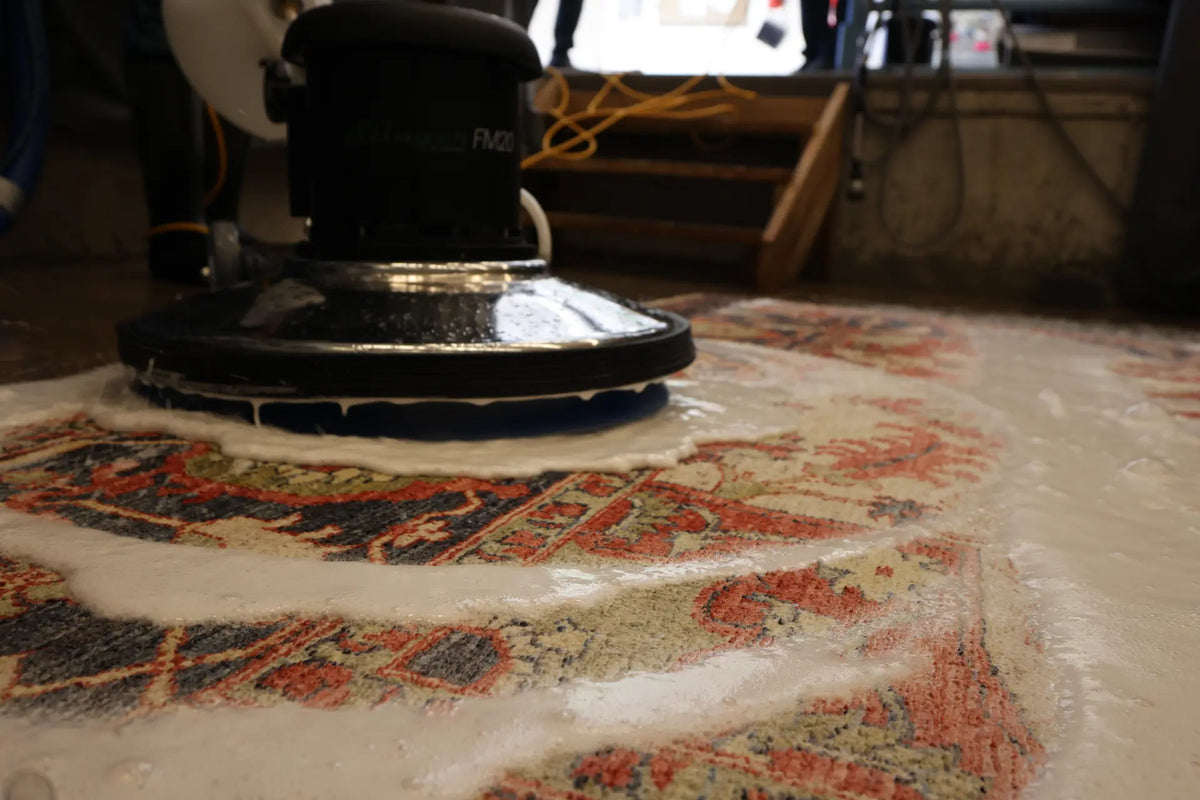
Step 4: Washing the Rug
Once the rug is prepared, the washing process begins. This step is done with care to clean thoroughly without stressing the fibers or dyes.
The washing process includes:
- Using water and cleaning solutions suited to the rug’s material
- Applying gentle agitation to lift dirt without damaging the weave
- Avoiding harsh scrubbing that can weaken fibers or spread dyes
Step 5: Rinsing and Residue Removal
After washing, the rug must be thoroughly rinsed. This step removes all remaining dirt and any cleaning solution left in the fibers.
Proper rinsing is important because:
- Residue can attract more dirt over time
- Leftover product can affect the rug’s texture
- Incomplete rinsing can lead to dullness or stiffness
The goal is to leave the rug clean, not coated. A thorough rinse ensures the fibers return to their natural state without buildup.
Step 6: Controlled Drying
Drying is just as important as washing. If moisture remains trapped inside the rug, it can lead to odor, mold, or structural damage.
Controlled drying ensures:
- Moisture is removed evenly from the entire rug
- Fibers do not shrink or become distorted
- Dyes remain stable and do not bleed
This step is done in a monitored environment where airflow, temperature, and humidity are managed carefully. Proper drying protects the rug’s shape, texture, and overall condition.
Step 7: Final Grooming and Inspection
Once the rug is fully dry, it goes through a final stage to restore its appearance and confirm that the cleaning was successful.
This step includes:
- Grooming the fibers to reset their natural direction and texture
- Checking for any remaining spots or uneven areas
- Inspecting the rug for overall condition after cleaning
This final check ensures nothing is missed before the rug is ready for use again.
Each step in the cleaning process is designed to work together to preserve the condition of the rug over time.
When these steps are done correctly, the rug keeps its color, texture, and strength. This is what allows fine rugs to last for decades without losing their character.
What Makes Professional Rug Washing Different
Professional rug washing is built around process and control. Each step is planned to suit the rug, not forced into a one-size approach.
- Cleaning methods are matched to fiber type and condition
- Water and solutions are used in controlled amounts
- Equipment is designed to clean deeply without damage
- Drying is managed to prevent moisture issues
This level of precision is what separates professional care from basic cleaning. It ensures the rug is not only clean but also preserved for long-term use.
Working with an experienced provider like Isberian Rugs means your rug is handled with the care and expertise it requires from start to finish.
Trust Your Rug to the Right Hands
When you know what goes into proper rug washing, the difference is clear. Each step is designed to clean deeply while protecting the fibers, dyes, and structure that make the rug valuable.
At Isberian Rugs, this process is handled with care and consistency. With over five decades of experience in Aspen and a heritage that spans five generations, the team understands how to treat fine and handmade rugs without putting them at risk.
If your rug needs professional cleaning, working with Isberian Rugs in Basalt Showroom ensures it is cleaned thoroughly and returned in the best possible condition.
FAQs
Can carpet cleaning help with allergies?
Yes. Proper cleaning removes dust, allergens, and debris trapped deep within the fibers. This can improve indoor air quality and reduce allergy symptoms, especially in homes with pets or high dust levels.
What happens if you wash a rug?
When done correctly, washing removes deep dirt, oils, and buildup that regular cleaning cannot reach. When done incorrectly, it can lead to color bleeding, fiber damage, or trapped moisture. The outcome depends on the method used and how well the process is controlled.
What are the 7 stages of cleaning?
Professional rug cleaning typically follows these stages:
- Inspection
- Dust removal
- Pre-treatment of stains
- Washing
- Rinsing
- Controlled drying
- Final grooming and inspection
Each step is adjusted based on the rug’s material and condition.
Can the new carpet smell cause headaches?
Yes. New carpets can release odors from materials and adhesives, which may cause headaches or discomfort for some people. Proper ventilation helps reduce this effect, and professional cleaning can help remove lingering odors over time.


