
A fine rug is not just another piece of décor. It is a crafted object made from natural fibers, a handwoven structure, and dyes that can react quickly to the wrong kind of care. What works for wall-to-wall carpet or synthetic rugs can cause fading, fiber damage, or permanent distortion in a handmade piece. One wrong cleaning method is often enough to change how a rug looks and feels.
In this article, we will walk through how to clean a fine rug the right way, what to expect from professional rug cleaning, and how to avoid the common mistakes that shorten a rug’s lifespan.
Key Takeaways
- Fine rugs require a different cleaning approach than standard carpets.
- Dirt settles deep into fibers and causes long-term wear if not removed.
- Most fine rugs should be professionally cleaned every 6 to 18 months, depending on use.
- Home care should stay limited to vacuuming and immediate spill control.
- Harsh chemicals, scrubbing, and excess water can cause permanent damage.
- Professional cleaning protects color, fiber strength, and structure.
- Isberian Rugs brings decades of expertise and specialized care to preserve fine rugs properly.
Why Rug Cleaning Is Different for Fine and Handmade Rugs
Fine rugs are built differently, and they respond differently to cleaning.
Most are made from natural fibers like wool or silk. These materials absorb moisture, hold onto dyes, and can weaken when exposed to the wrong chemicals or too much water. Unlike synthetic rugs, they are not designed to handle aggressive cleaning methods.
The structure also matters. Handmade rugs are woven, not machine-locked. That means:
- Fibers can shift if handled roughly
- Knots can loosen over time
- Backing is part of the rug itself, not a separate layer
Dyes are another concern. Many fine rugs use natural or hand-dyed pigments that can bleed when over-wet or exposed to strong cleaners.
Because of this, proper cleaning is not just about removing dirt. It is about:
- Preserving color
- Protecting fiber strength
- Maintaining the rug’s shape and structure
This is why fine rugs require a more careful, controlled approach compared to standard carpet cleaning.
How Often Should You Clean a Fine Rug?
Cleaning frequency depends on how the rug is used and what it is exposed to daily. Fine rugs do not always look dirty on the surface, but dust and grit settle deep into the fibers over time.
As a general guide:
- Light use areas → every 12 to 18 months
- Moderate traffic → every 9 to 12 months
- High-traffic homes → every 6 to 9 months
- Homes with pets or allergies → more frequent cleaning may be needed
Regular vacuuming helps, but it does not remove the embedded debris that slowly wears down fibers from within.
Watch for signs that your rug needs professional cleaning:
- Colors start to look dull
- The surface feels dry or rough
- Odors begin to linger
- Dust rises when the rug is disturbed
What Happens During Professional Rug Cleaning?
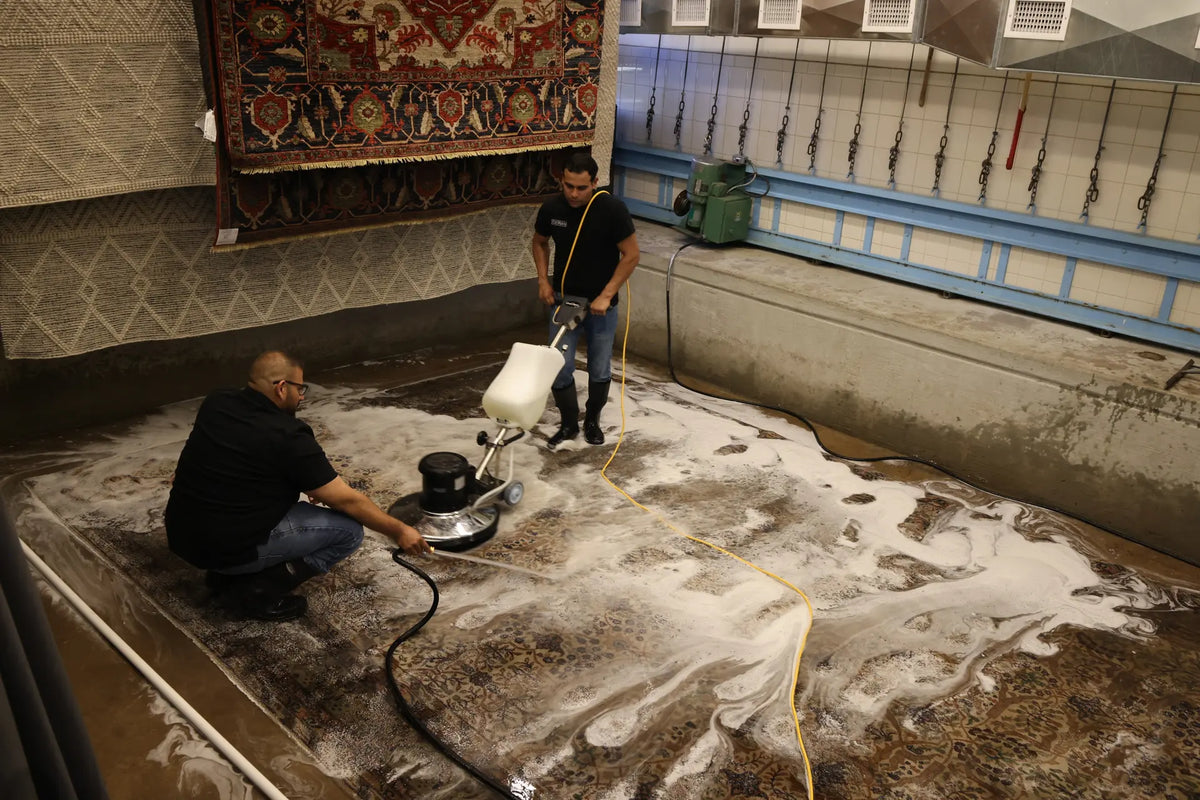
Professional rug cleaning is a controlled process designed to clean deeply without damaging the rug’s fibers, dyes, or structure. Each step is adjusted based on the rug’s material, age, and condition.
A typical process includes:
- Inspection: The rug is examined for fiber type, dye stability, wear, and existing damage.
- Dust removal: Dry soil is removed before washing. This step is critical because embedded grit causes long-term fiber wear.
- Washing: The rug is cleaned using methods suited to its material. Wool, silk, and antique rugs all require different handling.
- Rinsing: Residue from dirt and cleaning solutions is fully removed to prevent buildup.
- Controlled drying: The rug is dried in a monitored environment to avoid shrinkage, color bleeding, or mold.
- Final grooming: Fibers are reset, and the rug is finished to restore its natural look and texture.
Can You Clean a Fine Rug at Home?
Some basic care can be done at home, but it should be limited to surface maintenance. Fine rugs are sensitive to moisture, pressure, and cleaning agents, so the goal is to prevent damage.
What is generally safe:
- Regular vacuuming without aggressive brush settings
- Blotting spills immediately with a clean, dry cloth
- Using plain water in small amounts for fresh spots
What to avoid:
- Harsh cleaning solutions or store-bought carpet shampoos
- Scrubbing stains, which can damage fibers and spread dyes
- Over-wetting the rug, which can lead to shrinkage or odor
- Machine washing or steam cleaning
Common Rug Cleaning Mistakes That Cause Damage
Many rugs are damaged during cleaning, not from use. Small mistakes can lead to fading, fiber loss, or long-term structural issues.
Here are the most common ones:
- Using carpet cleaners on fine rugs
- Scrubbing stains aggressively
- Over-wetting the rug
- Letting spills sit too long
- Improper drying
- Skipping regular deep cleaning
Avoiding these mistakes helps preserve both the look and structure of a fine rug.
When to Choose Professional Rug Cleaning
Consider professional cleaning when:
- The rug is handmade, antique, or made from delicate fibers
- Stains do not lift with light blotting
- Odors remain after basic cleaning
- The rug has not been deep-cleaned in over a year
- There is visible soil buildup or dullness
For valuable rugs, this step protects both longevity and appearance.
How to Choose the Right Rug Cleaning Service
Not all rug cleaning services handle fine rugs with the level of care they require. The difference often comes down to process, experience, and how much control they have over the cleaning environment.
Here is what to look for:
- In-house cleaning facility
- Experience with fine and handmade rugs
- Fiber-specific cleaning methods
- Proper dust removal before washing
- Controlled drying process
- Repair and restoration capability
Protect Your Rug the Right Way
A fine rug can last for decades when it is properly cared for. Cleaning it professionally protects the fibers, preserves color, and helps maintain the structure that gives the rug its value.
Light maintenance at home plays a role, but it does not replace deep, controlled cleaning. Over time, dust, oils, and debris build up in ways that are not visible at first but still affect the rug’s condition.
This is where experience matters.
At Isberian Rugs, rug care is not treated as a basic service. It is a specialized process built on generations of knowledge. With over five decades of experience in Aspen and a heritage that spans five generations, the team understands how different fibers, dyes, and weaving techniques respond to cleaning.
Every rug is handled with a method that fits its material and condition. Contact us now to give your rug the level of care it was made to receive.
FAQs
How do professional cleaners clean rugs?
Professional rug cleaners follow a controlled process designed for the rug’s fiber, dye, and construction. It typically starts with inspection, followed by dust removal to clear embedded grit. The rug is then washed using fiber-safe solutions, rinsed thoroughly, and dried in a controlled environment to prevent shrinkage or color bleeding. The goal is deep cleaning without damaging the rug.
What are the 7 stages of cleaning?
While methods can vary, most professional rug cleaning follows these key stages:
- Inspection
- Dust removal
- Pre-treatment of stains
- Washing
- Rinsing
- Controlled drying
- Final grooming and inspection
Each step is adjusted based on the rug’s material and condition.
What do professional rug cleaners use?
Professional cleaners use specialized tools and cleaning agents designed for fine rugs:
- Fiber-safe cleaning solutions
- Dusting equipment to remove embedded debris
- Low-moisture or controlled washing systems
- Drying rooms or climate-controlled environments
These are not the same as standard carpet cleaning tools, which are often too harsh for handmade rugs.
How do you professionally clean an area rug?
Professional cleaning of an area rug involves a full, off-site process rather than surface treatment at home. The rug is first inspected and dusted, then washed using a method suited to its fibers. After rinsing, it is dried under controlled conditions and finished to restore its texture and appearance.
For fine and valuable rugs, working with an experienced provider like Isberian Rugs ensures the cleaning process protects both the look and structure of the piece.


